
Japanese tattooing splits into three main approaches which are traditional, neo-Japanese and realistic. All three draw on the same imagery, dragons, koi, tigers, hannya masks, samurai, but the technique, linework and shading behind that imagery differ enough to produce very different results on skin.
- Traditional favours bold outlines and flat colour
- Neo-Japanese pushes that language in a brighter, more illustrative direction
- Realistic leans into shading, depth and texture to make the same subjects look almost cinematic
Which one suits you comes down to how you want the piece to look and feel, and how much time and space you’re able to give it.
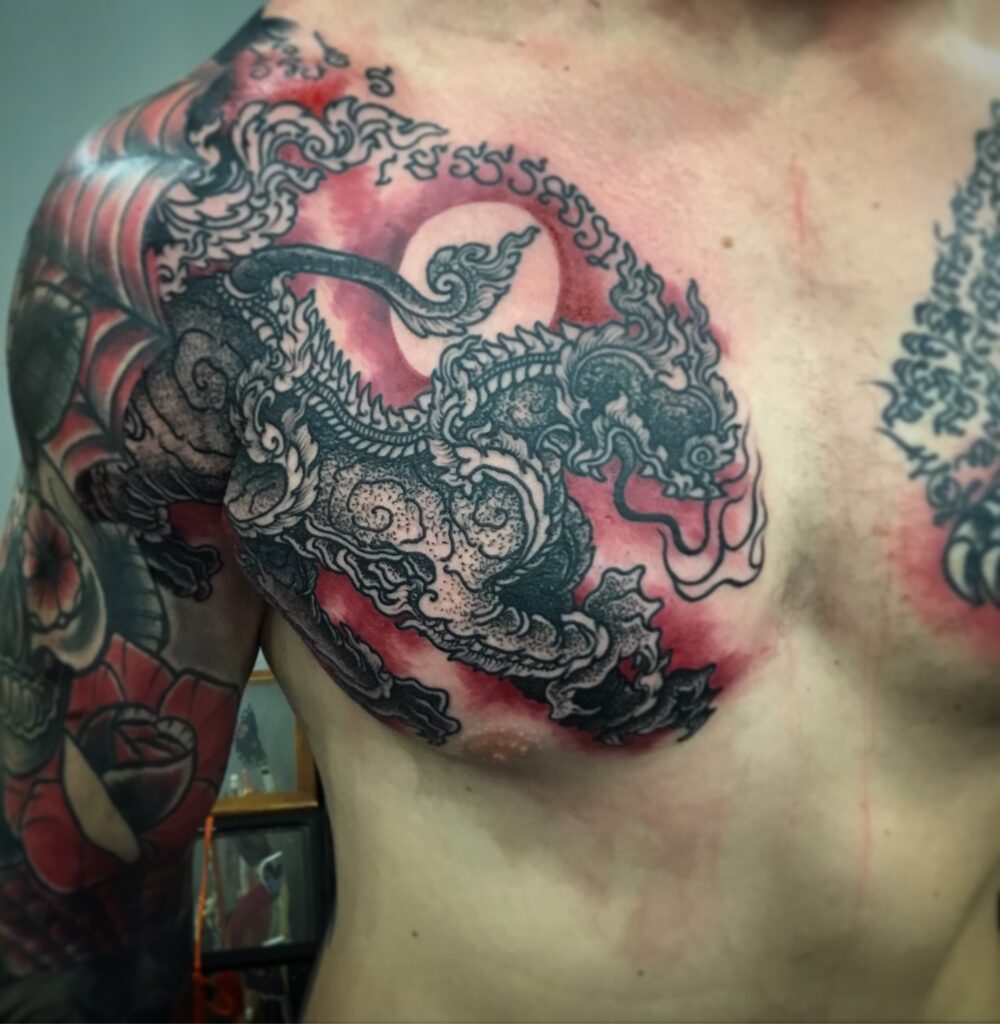
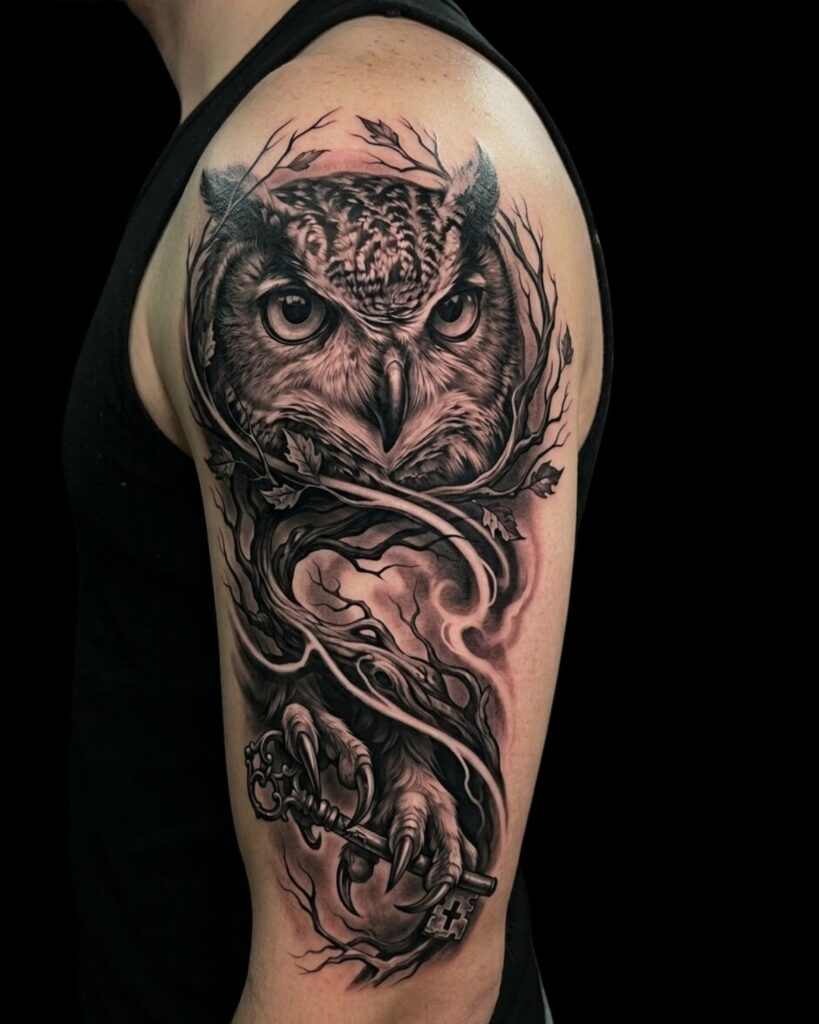
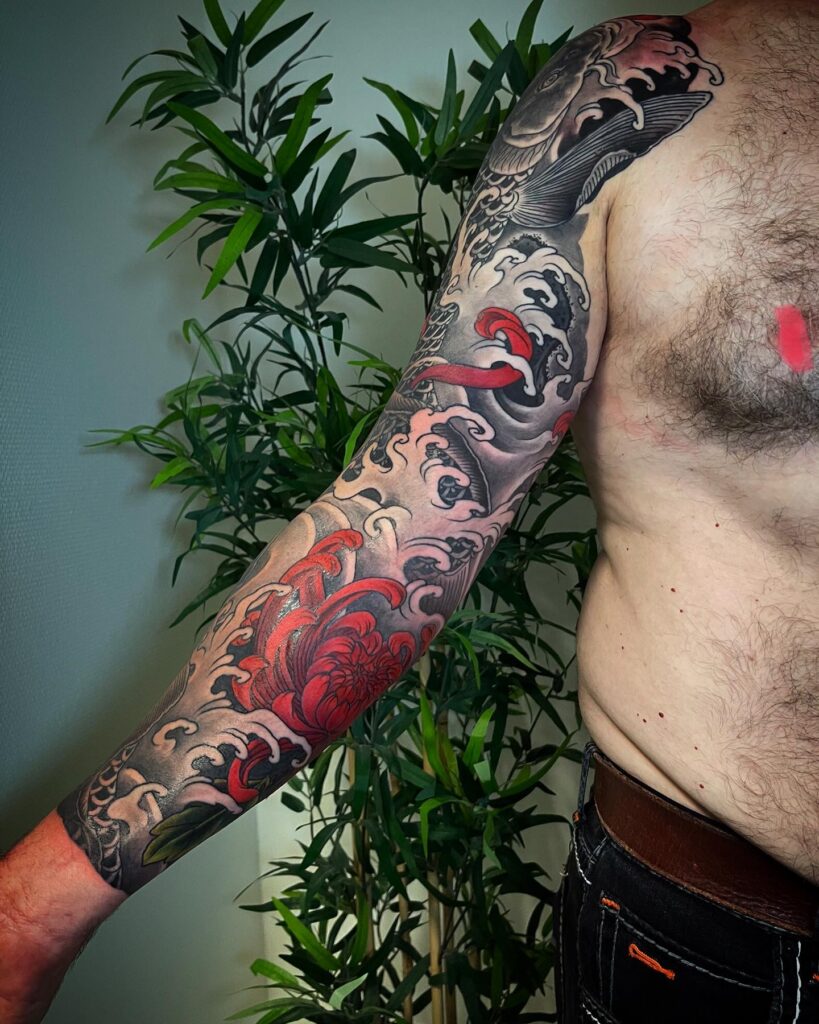
Traditional Japanese (Irezumi)
Traditional Japanese tattooing is built on bold outlines, strong flat shapes, distinctive backgrounds and a clear visual hierarchy. It’s the style most people picture when they think of Japanese tattoos, with centuries of technique behind it, including tebori, the hand-poked method still practised by some artists today.
Detail here comes from composition and symbolism rather than shading or lifelike texture. The result is a graphic, high-contrast look with flat colour blocks and confident outlines that read clearly at a glance. Because the linework and colour blocking follow established conventions, traditional pieces also tend to move faster in the chair once the design is settled.
Neo-Japanese
Neo-Japanese takes the same subjects and structure and reworks them with a more contemporary, illustrative approach. Linework tends to be more expressive, colour palettes often push brighter or more saturated, and artists have more room to experiment with proportion and style than traditional conventions typically allow.
Visually, it sits between the other two: less rigid than traditional work, but without the full dimensional shading of realism. It suits clients who want a Japanese tattoo that clearly nods to tradition without following its rules exactly. Session time is similar to traditional work, once the outline and colour approach are locked in, execution moves at a comparable pace.
Realistic Japanese
Realistic Japanese tattooing keeps the same subject matter but replaces flat rendering with gradual shading, dimensional modelling and lifelike texture. A dragon can carry individually lit scales. A tiger’s face can carry real fur and expression. A hannya mask can take on the kind of surface detail you’d expect from a photograph.
This is where the three styles diverge most in execution. Building smooth gradients, layered shading and fine texture takes considerably more time in the chair than blocking in flat colour, so realistic pieces generally involve longer sessions which is sometimes spread across several appointments for larger work. The payoff is depth and a realistic tattoos deliver a sense of volume and light that the other two styles don’t attempt.
How the Three Compare
Depth and Dimension
- Traditional is intentionally flat and graphic
- Neo-Japanese introduces more illustrative shading and colour variation without full dimensional rendering
- Realistic is built entirely around shading and depth, aiming for a lifelike, almost photographic quality
Session Time
- Realistic generally takes the longest to complete, given the shading and texture work involved
- Traditional and neo-Japanese tend to move faster once linework and colour blocking are settled
Size and Placement
- All three styles work well on large canvases such as backs, sleeves, thighs. Realistic in particular benefits from space, since fine shading and texture need room to read properly; smaller realistic pieces are harder to pull off convincingly than smaller traditional ones.
- Traditional and neo-Japanese scale more easily down to smaller placements while keeping their impact.
The Visual Impact
- Traditional reads clearly from a distance with bold, simple compositions
- Neo-Japanese offers more stylistic flexibility and brighter colour work
- Realistic delivers the most drama and depth, particularly on large-scale pieces like full sleeves or back pieces.
Combining Styles
These three approaches aren’t mutually exclusive within a single piece. A realistic tiger can sit within a more traditional background of waves or clouds. A hannya mask can carry realistic texture while the surrounding wind bars stay bold and graphic. Blending styles like this is common in larger work, letting a piece carry the graphic punch of traditional elements alongside the depth of realism where it counts most, usually the main subject.
Choosing the Right Style for You
If you want a bold, graphic look with a clear visual hierarchy, traditional is the classic choice. If you want something that nods to tradition but feels more contemporary and flexible in colour and line, neo-Japanese is worth exploring. If visual depth and drama matter most to you, and you’re prepared to commit to the size and session time it needs, realistic delivers a result the other two styles don’t attempt.
Although whichever direction fits your goals, the design decisions, subject, scale, placement, and how much detail the skin can realistically carry, are best worked through with an artist who has experience across all three approaches. If you’re in Pattaya and want to talk through which style fits what you have in mind, get in touch with us and we’ll walk through the options together.